
Mastering the Ontario Growing Season: Your Guide to Planting and Fertilizing
SEASONAL TIPS
Luis C.
2/25/20262 min read
Success in Ontario’s climate (typically Hardiness Zones 5 and 6 in the South) is all about timing. To get that deep green lawn and those vibrant blooms, you need to work with the seasons, not against them. Here is your roadmap for a professional-grade landscape.
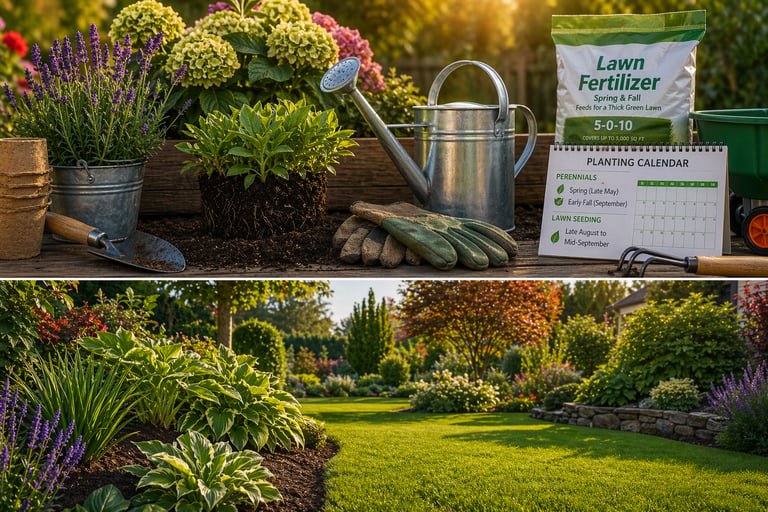
When to Plant: Timing is Everything
Perennials: The Double Window
You have two primary opportunities to get your perennials in the ground:
Spring (Late May): Once the risk of frost has passed (usually after Victoria Day), planting allows your flowers to establish themselves before the mid-summer heat.
Early Fall (September): This is often the "secret" best time. The soil is warm but the air is cool, allowing roots to settle comfortably without the stress of the sun, preparing them for a massive burst of growth the following spring.
Lawn Seeding: The Fall Advantage
While many people think of spring for grass seed, late August to mid-September is actually the gold standard in Ontario. The warm soil ensures fast germination, while the cooler nights and increased rainfall provide the perfect nursery for young grass blades.
The Fertilization Roadmap
Think of fertilizer as the fuel for your landscape. For a resilient yard, follow this three-step program:
Early Spring (April/May): Use a nitrogen-rich formula. This acts as a "wake-up call," fueling the initial surge of green growth after the snow melts.
Late Spring (June): This is your "strength phase." A second application helps your lawn and plants build the energy reserves they’ll need to survive the high-stress heat of July and August.
Late Fall (September/October): The most critical application of the year. Using a "Winterizer" fertilizer helps the roots store carbohydrates. This doesn't just help them survive the ice and snow—it ensures they are the first to turn green in the spring.
Pro Tips for a Low-Maintenance Yard
The Power of Mulch: Apply a 5–7 cm (2–3 inch) layer around your perennials. Mulch is like a thermal blanket; it keeps roots cool, locks in moisture so you water less, and smothers weeds before they can start.
Mow High for Success: Adjust your mower blade to 7.5 cm (3 inches). Longer grass blades shade the soil, which prevents evaporation and makes it much harder for weed seeds (like crabgrass) to germinate.
Ready to transform your curb appeal? Following these local Ontario guidelines will ensure your garden isn't just surviving, but thriving.
#OntarioGardening #LawnCareTips #GTAPropertyMaintenance #SpringPlanting #LandscapingOntario #GreenGrass #GardenEducation
Contact
© 2026. All rights reserved.


Serving North York & GTA
Avenue Seasons Landscaping Inc.